
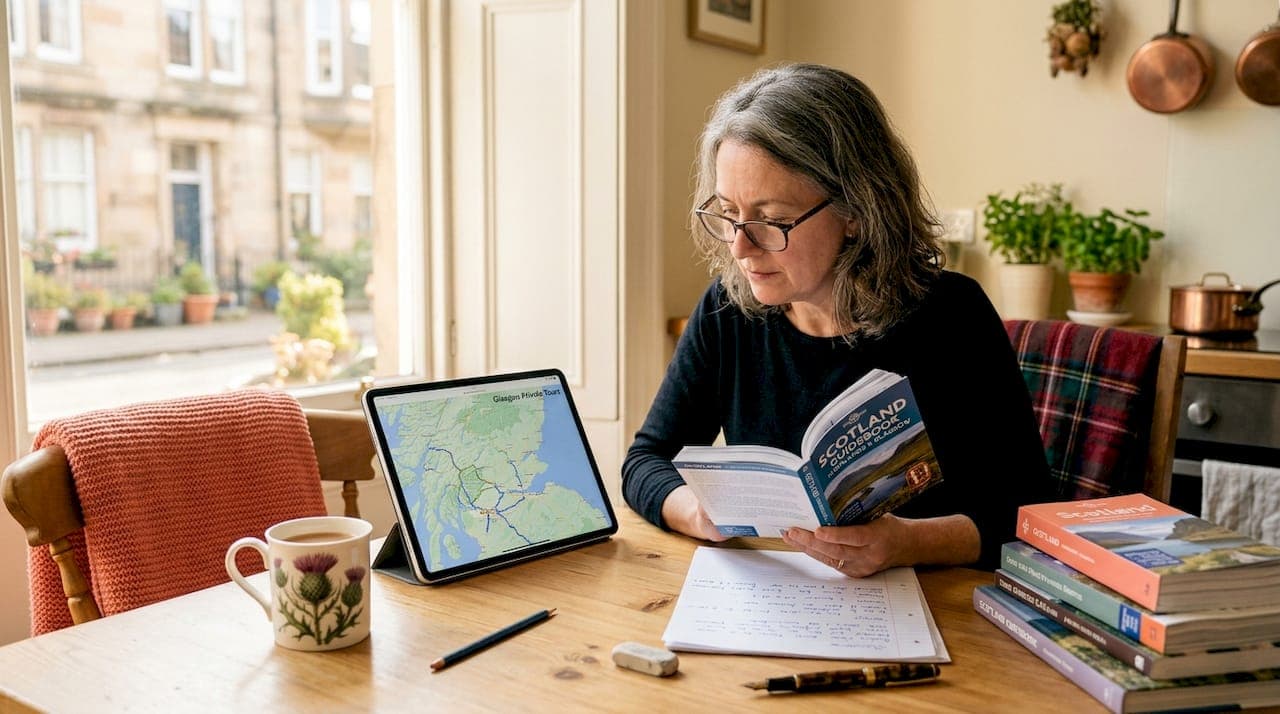
Standard group tours move at a pace designed for the average traveler, hitting the same landmarks in the same order with the same rehearsed commentary. If you've ever stood in a crowd at a famous castle, wondering why you're not somewhere that actually reflects your passions, you already understand the problem. Requesting a bespoke private tour in Scotland changes everything. This guide walks you through exactly what to prepare, how to communicate your needs, and how to choose a provider who will build an experience genuinely shaped around you.
Table of Contents
- Why request a bespoke tour? Key benefits for discerning travelers
- Preparing your request: What to know and clarify before you inquire
- How to make the request: Step-by-step guide to securing your personalized tour
- Ensuring quality: Verifying expertise and adaptability in your tour provider
- Adapting to realities: Seasonality, timing, and edge-case scenarios in bespoke Scotland touring
- Why the best bespoke tours demand active partnership with your guide
- Connect with expert guides for your personalized Scottish adventure
- Frequently asked questions
Key Takeaways
| Point | Details |
|---|---|
| Tailor your experience | Personalized tours in Scotland focus completely on your specific interests and travel needs. |
| Plan your details | Providing clear information about your group, timing, and preferences enables a flawless trip design. |
| Communicate openly | Dialogue with your guide—before and during your visit—produces the best outcomes. |
| Account for reality | Season, daylight, and timing may affect your options; clarity up front avoids disappointment. |
| Verify providers | Check reviews for adaptability, expertise, and flexibility when requesting a bespoke tour. |
Why request a bespoke tour? Key benefits for discerning travelers
Let's examine why this approach offers unmatched experiences and peace of mind.
The core appeal is simple: a bespoke tour puts your interests at the center of every decision. Whether you're drawn to medieval history, single malt whisky distilleries, family ancestry research, coastal hiking, or contemporary Scottish art, a tailored private tour builds the day around what excites you, not what's convenient for a bus full of strangers.
Luxury bespoke custom touring in Scotland is built around the traveler's stated interests, with practical upfront information gathering covering pickup and drop-off details, timing constraints, and the kinds of experiences desired. This means the conversation starts long before the tour itself, giving providers the context they need to design something genuinely personal.
Here's what sets bespoke apart from off-the-shelf options:
- Thematic depth: Your guide focuses on your chosen subjects rather than covering every topic superficially.
- Flexible pacing: Spend an extra hour at a location that moves you, and skip what doesn't.
- Private vehicle and chauffeur-guide: No waiting for other guests, no compromising on timing.
- Logistical coordination: Pickups from your hotel, cruise terminal, or airport, timed around your schedule.
- Real-time adaptation: A skilled guide can pivot based on your live reactions and evolving interests.
"Tailored journeys and personalized exploration are increasingly central to how travelers expect to engage with destinations. The era of one-size-fits-all itineraries is giving way to experiences built around individual curiosity."
Tourism trend research from VisitScotland positions personalized exploration and tailored journeys as a major direction of travel demand. This isn't just a luxury preference anymore. It reflects a broader shift in how people want to spend their time and money when they travel.
For those exploring Scotland private tours, the range of possible themes is genuinely wide. From Jacobite history to Gaelic culture, from dramatic Highland landscapes to urban food scenes, Scotland rewards curiosity in almost every direction.
Preparing your request: What to know and clarify before you inquire
Once you see the benefits, it's time to assemble information that ensures a perfect match.
Providers who design truly bespoke custom tours rely on upfront details to build itineraries that work. Walking in with vague preferences leads to generic suggestions. Walking in with clear answers leads to something extraordinary.
Here's a practical numbered checklist to work through before you reach out:
- Group composition: How many people are traveling? Include ages, especially if children or seniors are in the group.
- Primary interests: List your top three to five themes. Be specific. "History" is broad. "Jacobite risings and clan history" gives a guide something to work with.
- Mobility and pace: Are there physical limitations? Do you prefer a relaxed pace with long stops, or a more active day covering more ground?
- Logistical anchors: Note your arrival and departure times, hotel location, cruise terminal, or flight constraints.
- Must-see sites: Identify two or three non-negotiables. Everything else can flex around them.
- Budget range: Knowing your comfort level helps providers suggest appropriate vehicles, private access options, and add-ons.
| Information category | Why it matters | Example details |
|---|---|---|
| Group size and ages | Affects vehicle choice and pacing | Family of 4 with two teenagers |
| Thematic interests | Shapes the entire itinerary | Whisky distilleries, clan ancestry |
| Mobility needs | Determines accessibility of sites | Limited walking, prefers flat terrain |
| Logistical constraints | Prevents scheduling conflicts | Cruise departure at 6 PM |
| Must-see priorities | Protects your non-negotiables | Stirling Castle, Loch Lomond |
| Preferred pace | Sets the tone for the day | Relaxed, with time for photography |
Pro Tip: If you're considering a day trip option to Loch Lomond or Argyll, note whether you want to stop at specific viewpoints, visit a castle interior, or simply enjoy the scenery from the vehicle. The more specific you are, the better the result.
Seasonality also matters more than most travelers realize. Scotland in June offers up to 18 hours of daylight, which means ambitious itineraries are genuinely feasible. December tours operate in roughly seven hours of usable daylight, which forces tighter choices. Knowing your travel dates before you inquire helps providers give you honest advice about what's realistic.
How to make the request: Step-by-step guide to securing your personalized tour
With your details in hand, requesting your dream itinerary can be a simple, collaborative dialog.
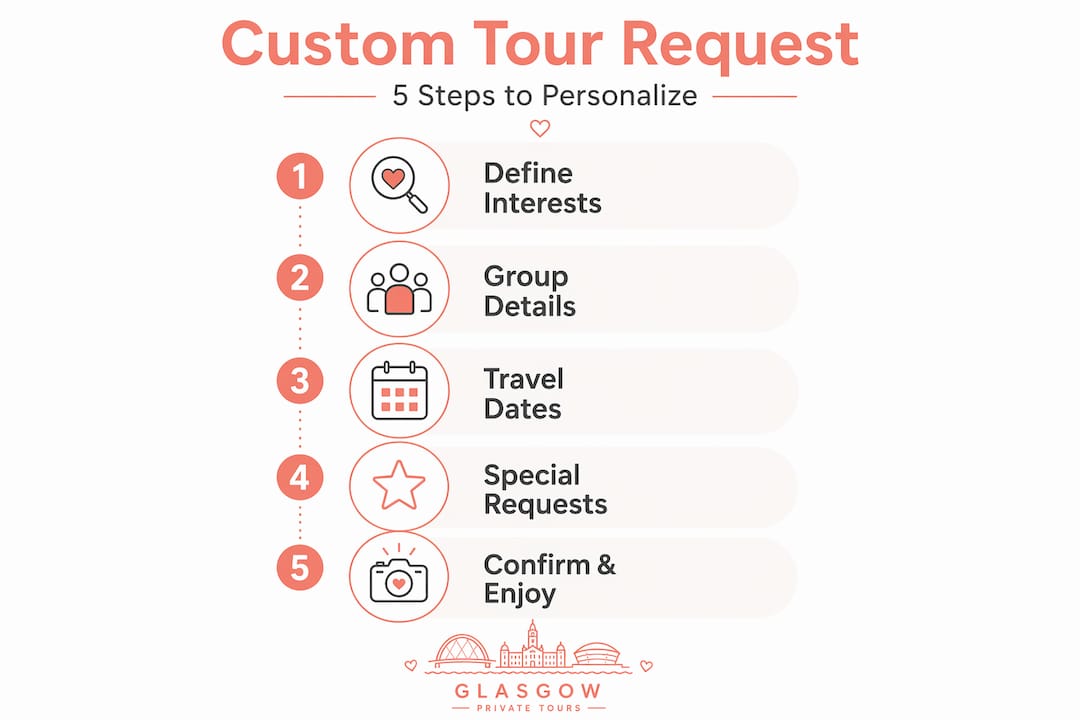
The actual process of submitting a request is straightforward when you approach it with intention. Here's how to do it effectively:
- Write a clear, specific inquiry. Open with your travel dates, group size, and top thematic interests. Avoid vague language like "we like history." Say "we're particularly interested in the Wars of Scottish Independence and would love to visit sites connected to William Wallace and Robert the Bruce."
- State your logistical anchors early. If you're on a cruise with a hard return time, say so immediately. Providers need to know fixed constraints before they design anything.
- Ask about flexibility. Good providers will tell you honestly which elements of a proposed itinerary can shift and which are fixed by geography or timing.
- Request a proposed itinerary. Most experienced operators will respond with a draft route and rough timeline. Review it carefully and push back on anything that doesn't reflect your stated priorities.
- Confirm adaptability. Ask directly: "Can we adjust the pace or add stops on the day if we want to spend more time somewhere?" The answer tells you a lot about the provider's approach.
- Clarify what's included. Vehicle type, guide expertise, entrance fees, and meal breaks should all be addressed before you confirm.
Bespoke touring in practice requires theme-aware planning around logistical constraints like daylight, seasonality, and fixed travel commitments. A provider who addresses these factors proactively is one who knows what they're doing.
| Tour type | Flexibility level | Best for |
|---|---|---|
| Pure bespoke | Fully customized from scratch | Specific themes, unique requests |
| Semi-customizable | Preset routes with adjustable stops | First-time visitors, broad interests |
| Fixed private tour | Set itinerary, private group only | Efficiency, popular landmark focus |
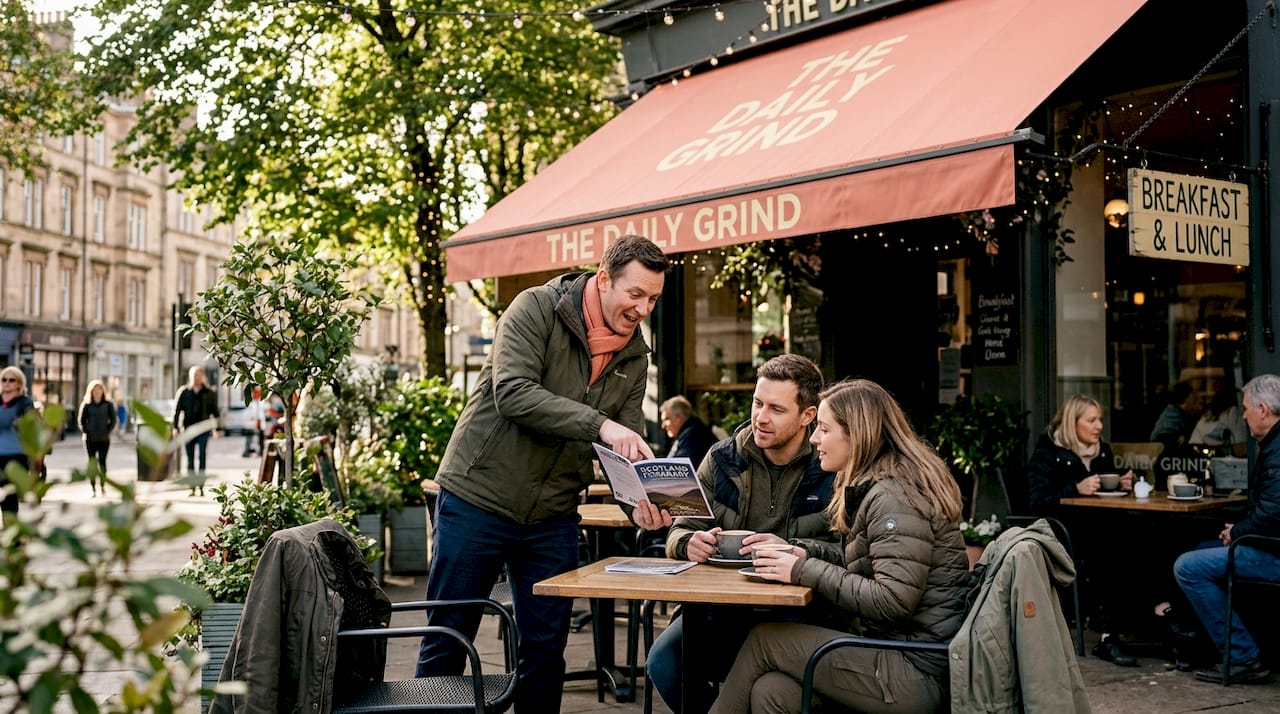
For urban exploration, Glasgow walking tours offer a deeply personal way to experience the city's architecture, culture, and history at your own pace. For wider regional coverage, a tour with vehicle opens up the Highlands, Loch Lomond, and beyond without the constraints of public transport.
Pro Tip: Don't send a one-line inquiry. A detailed, thoughtful message signals that you're a serious traveler and gives the provider everything they need to respond with a genuinely tailored proposal rather than a generic brochure.
Ensuring quality: Verifying expertise and adaptability in your tour provider
After your request, validating service quality sets the stage for memorable, hassle-free travel.
Not all private tour guides are equal, and star ratings alone won't tell you enough. The real indicators of quality are buried in the narrative of reviews, not the number of stars at the top.
When reading reviews, look specifically for language that describes:
- Real-time adaptation: Did the guide change the plan based on what the travelers wanted in the moment?
- Depth of knowledge: Did the guide go beyond surface-level facts to provide genuine historical, cultural, or thematic context?
- Responsiveness before the tour: Was the provider communicative and thorough during the planning stage?
- Handling of complications: Weather delays, closed sites, and timing changes happen. How did the guide respond?
"The best reviews don't just say 'great day out.' They describe specific moments where the guide surprised them with knowledge, adjusted the itinerary on the fly, or went out of their way to find something unexpected."
Review platforms confirm that bespoke and private tours succeed when guides can adapt in real time to traveler interests and constraints. They also reveal edge cases, including guides who are engaging storytellers but lack depth on specific topics, and how providers handle feedback and improvement.
Watch for red flags too. A guide who deflects questions about specific themes, or a provider whose reviews are uniformly glowing but oddly vague, may not deliver the thematic depth you're looking for. Reading recent reviews from travelers with similar interests to yours is the most reliable filter.
For an honest look at what makes a Scotland experience genuinely memorable, reviewing tour experiences from a local guide's perspective can help you calibrate your expectations before you book.
Pro Tip: Search for reviews that mention your specific interest by keyword. If you care about whisky history, look for reviews that use the word "whisky" and see how the guide handled that theme. This targeted approach reveals far more than reading the top ten reviews in chronological order.
Adapting to realities: Seasonality, timing, and edge-case scenarios in bespoke Scotland touring
But even perfectly designed tours run into Scotland's unique realities. Let's cover how to plan around them.
Scotland is a country of extraordinary beauty and genuinely unpredictable conditions. A bespoke tour that ignores these realities will disappoint. One that plans around them will feel seamless.
Key seasonal and logistical factors to keep in mind:
- Winter daylight: Scotland in December and January offers roughly seven hours of usable daylight. This limits how many sites you can visit and how far you can travel from your base.
- Summer midges: The Scottish Highlands in summer are breathtaking but notorious for biting insects, particularly near water. Coastal and elevated routes reduce exposure.
- Cruise and flight constraints: Hard return times require buffer planning. A tour that ends 90 minutes before your cruise departs is not a bespoke tour. It's a stress test.
- Road conditions: Highland roads are narrow and can be affected by weather. Winter driving adds time to any itinerary.
- Seasonal attraction hours: Many Scottish castles, distilleries, and historic sites operate on reduced winter hours or close entirely for maintenance periods.
Bespoke itinerary adjustments are often driven by exactly these factors. Providers who state these constraints explicitly during the planning phase are the ones you want to work with.
Scotland sees an average of 190 days of rain per year in many regions, which means weather contingency planning isn't optional. Ask your provider what happens if a planned outdoor site becomes inaccessible. A good answer involves specific alternatives, not vague reassurances.
Pro Tip: When choosing the right experience for your travel dates, ask your provider directly about the realistic daylight window and how it affects the proposed itinerary. This single question separates experienced operators from those who are just selling a product.
Why the best bespoke tours demand active partnership with your guide
Here's a perspective that most travel articles won't give you: booking a bespoke tour is not the end of your involvement. It's the beginning of a collaboration.
Many travelers treat the booking conversation as a transaction. They submit their preferences, receive an itinerary, confirm the date, and show up expecting magic. The best experiences don't work that way. They work because the traveler stayed engaged, communicated honestly, and treated the guide as a genuine partner rather than a service delivery mechanism.
Your guide is working with a fixed number of hours and a finite number of roads and sites. The more clearly you communicate your evolving priorities, both before and during the tour, the better they can allocate those resources. If you discover on the morning of the tour that you're more interested in a particular theme than you initially thought, say so. A skilled guide will adapt.
Review language that describes "refinements based on our interests," "flexible options," and whether history and context depth matched expectations is the clearest signal of a provider who genuinely operates this way. Look for those phrases when you're evaluating providers, and then be that kind of traveler once you've booked.
Live feedback during the tour matters just as much as upfront planning. If a site isn't landing the way you hoped, tell your guide. If you want to linger somewhere longer, say so. If a topic is sparking more curiosity than expected, ask your guide to go deeper. This is what separates a good private tour from a genuinely exceptional one.
Customizing your experience isn't just about the itinerary on paper. It's about the ongoing conversation that shapes every hour of the day. Treat your guide as a co-creator, not a driver with a script, and you'll come home with stories that no standard tour could have produced.
Connect with expert guides for your personalized Scottish adventure
If everything you've read here resonates, the next step is straightforward: reach out to a team that builds tours this way by default, not as an exception.
Glasgow Private Tours designs every experience around the individual traveler. Whether you want to start planning your Scotland private tour across the Highlands and beyond, take a private Glasgow tour with vehicle through the city's most compelling neighborhoods, or explore Loch Lomond and Argyll on a full-day excursion, the process starts with a conversation about what matters most to you. Share your interests, your constraints, and your must-sees. We'll build the rest around you.
Frequently asked questions
What information should I provide when requesting a bespoke tour in Scotland?
List your interests, group size, ages, travel dates, logistical constraints, and any must-see sites. Bespoke Scotland providers use this upfront detail to craft itineraries that genuinely reflect your priorities rather than defaulting to standard routes.
Can bespoke tours in Scotland accommodate last-minute changes or requests?
Most private guides aim to adapt in real time, but flexibility depends on season, lead time, and logistics. Review platforms confirm that the best providers handle in-the-moment changes well, though some constraints like road access and attraction hours are outside anyone's control.
How does seasonality affect bespoke tours in Scotland?
Shorter winter daylight limits daily itineraries significantly, and some attractions operate on reduced hours or close entirely. Itinerary adjustments driven by daylight, weather, and seasonal access are a normal part of bespoke tour planning in Scotland.
How can I check the quality of bespoke tour providers in Scotland?
Look for detailed, recent reviews that mention adaptability, guide knowledge depth, and specific responses to custom requests. Narrative reviews reveal far more about real-world quality than star ratings alone.
Are private tours in Scotland suitable for families or special interests like genealogy or whisky?
Absolutely. Bespoke Scotland providers regularly accommodate niche interests including ancestry research, whisky distillery visits, family-friendly pacing, coastal hiking, and Scottish football heritage, often combining several themes into a single cohesive day.
Recommended
- Scotland Private Tours — Private Glasgow Walking Tours | Expert Local Tour Guides
- Loch Lomond, Argyll & Castles Tour | Private Day Trip from Glasgow & Greenock | Discover and Book Your Scottish Adventure — Private Glasgow Walking Tours | Expert Local Tour Guides
- Private Glasgow Tour with Vehicle | See More, Walk Less — Private Glasgow Walking Tours | Expert Local Tour Guides